Reading a paint tube: 7 keys to choosing quality colours


Who hasn't felt overwhelmed when faced with the impressive wall of colours in an art supply shop? With so many different brands, qualities and packaging options, it's easy to feel lost. However, each paint tube is a veritable goldmine of information. This article will reveal seven key pieces of information, often overlooked, hidden on these labels that will radically transform the way you choose your colours, allowing you to make smarter purchases and master your mixtures like never before.
1. ‘Extra-Fine’ quality: Why the most expensive paint can be the most economical
The first distinction to be aware of is between ‘fine’ and ‘extra-fine’ paint. The fundamental difference lies in the concentration and quality of the pigments. In extra-fine paint, the mixture of pigment and binder is ground longer and more finely, giving the paste superior smoothness and purity.
Contrary to what one might think, extra-fine paint contains up to twice as many pigments as fine paint. Thanks to this higher colouring power, a small amount of extra-fine paint is sufficient to achieve the same colour intensity. In the long term, despite a higher purchase price, it can therefore seem more economical.
2. The Serial Number: The secret behind such different prices
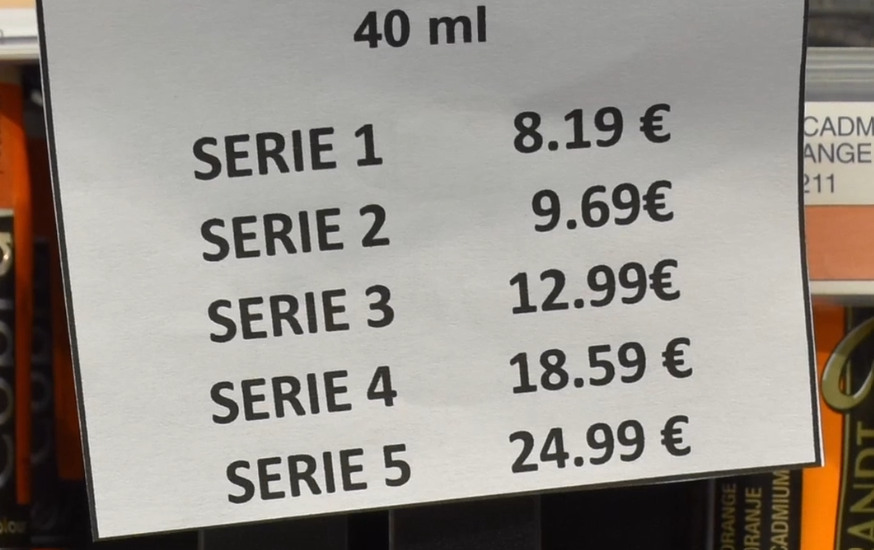
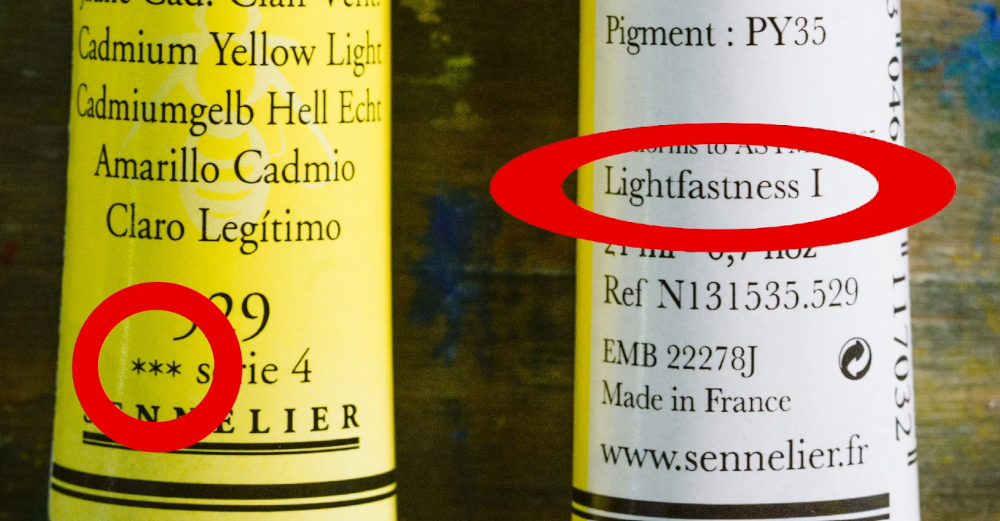
Only on extra-fine quality paints will you find a ‘serial’ number. It is crucial to understand that this number (Series 1, Series 2, Series 3, etc.) does not reflect the quality of the paint at all, but only the cost of the pigment used to make it.
The most common pigments are classified as Series 1, while rare and expensive pigments are found in higher series. Thus, a Series 1 tube may cost £5, while the same size in Series 6 may cost up to £35. But then, why does this concept of series not apply to fine paints? Simply because the amount of pigment they contain is not significant enough to impact the final price of the tube. Rest assured: in most extra-fine ranges, more than half of the colours are Series 1.
3. The Colour Index: The real name of your colour
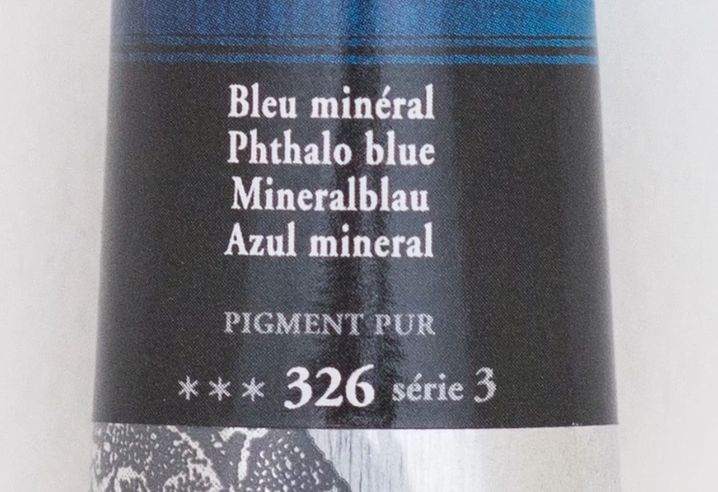
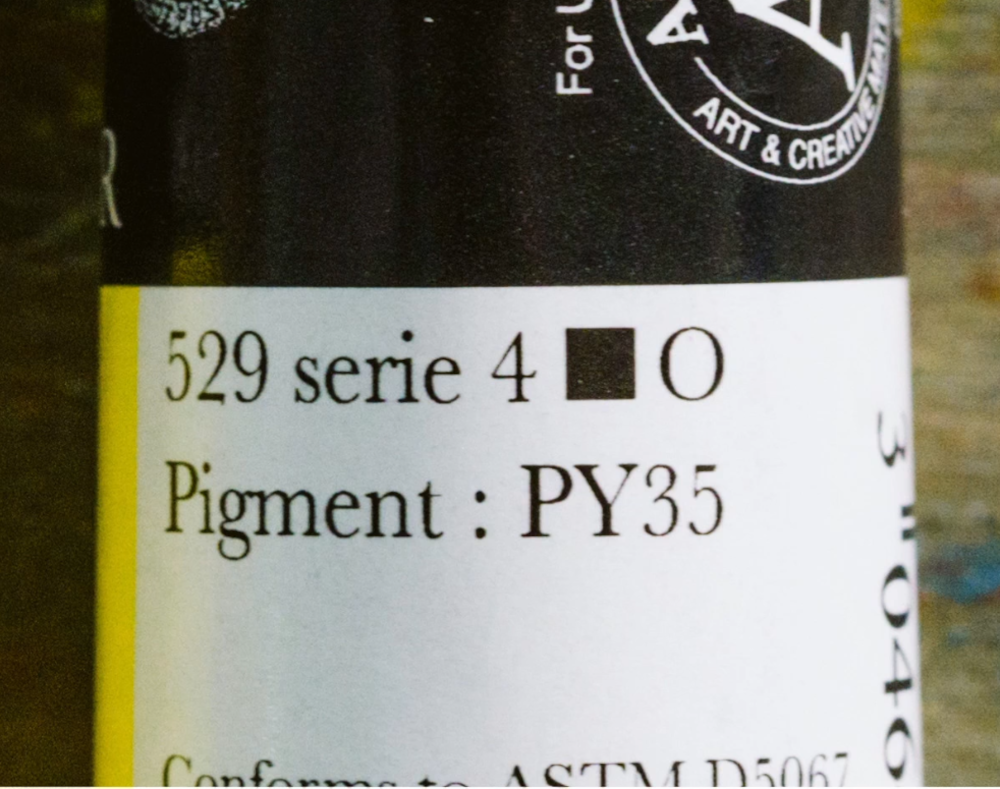
The Colour Index is an international code (e.g. PB for Pigment Blue, PR for Pigment Red, PY for Pigment Yellow, followed by a number) that reveals the exact pigment composition of your colour. This is the most reliable information on your tube.
Why is this so important? Because the commercial names of colours are often misleading. Manufacturers stopped putting mummy powder in ‘Mummy Brown’ a long time ago. For an artist, it offers two major advantages:
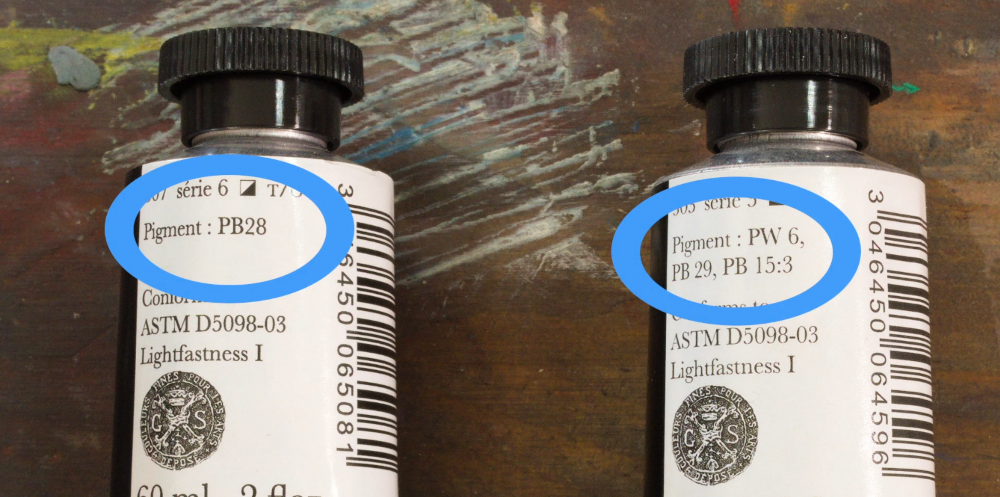
• It allows you to distinguish between a single-pigment colour (one code) and a compound colour (several codes). Single-pigment colours are infinitely superior for creating clear and luminous mixtures.
• In a composite colour, the pigment listed first is the one present in the greatest quantity. This is a detail known to connoisseurs, helping them to better anticipate the behaviour of the colour.
4. Lightfastness: The rating where 1 is better than 5.
Lightfastness refers to a colour's ability to resist fading caused by ultraviolet rays. It is a guarantee of your artwork's longevity.
You will sometimes find a star rating system used by manufacturers. It is better to rely on the official ASTM (American Society for Testing and Materials) classification, indicated in Roman numerals. And this is where the most counterintuitive aspect lies: the scale ranges from I to V, but I represents excellent resistance, while V indicates very low resistance. In other words, the higher the number, the lower the quality. To ensure that your artwork does not fade over time, always choose colours rated I or II.
5. The Opacity of Paint
Pigment not only gives paint its colour, it also gives it its opacity, or covering power. There are three levels: transparent, semi-transparent and opaque.
It is important to understand that no level is ‘better’ than another; the choice depends entirely on your technique and the desired effect.
• Transparent: Ideal for glazing techniques, which involve layering thin coats of translucent colour.
Opaque: Preferred for ‘alla prima’ painting (in a single layer), in the style of the Impressionists, for a more direct and covering effect.
There are two ways to identify the opacity of a tube of paint: the letters (T for transparent, O/T for semi-transparent, O for opaque) or a small square symbol. If the square is white, the colour is transparent; if it is half black, it is semi-transparent; if it is completely black, it is opaque.
6. True Colour vs. Imitation: The pitfall to avoid in your mixtures
This is where all the previous information comes into play. You have probably already noticed two tubes with almost identical colours but radically different prices. One is a ‘true’ colour, the other an imitation, often called a ‘tone,’ “substitute” or ‘hue.’
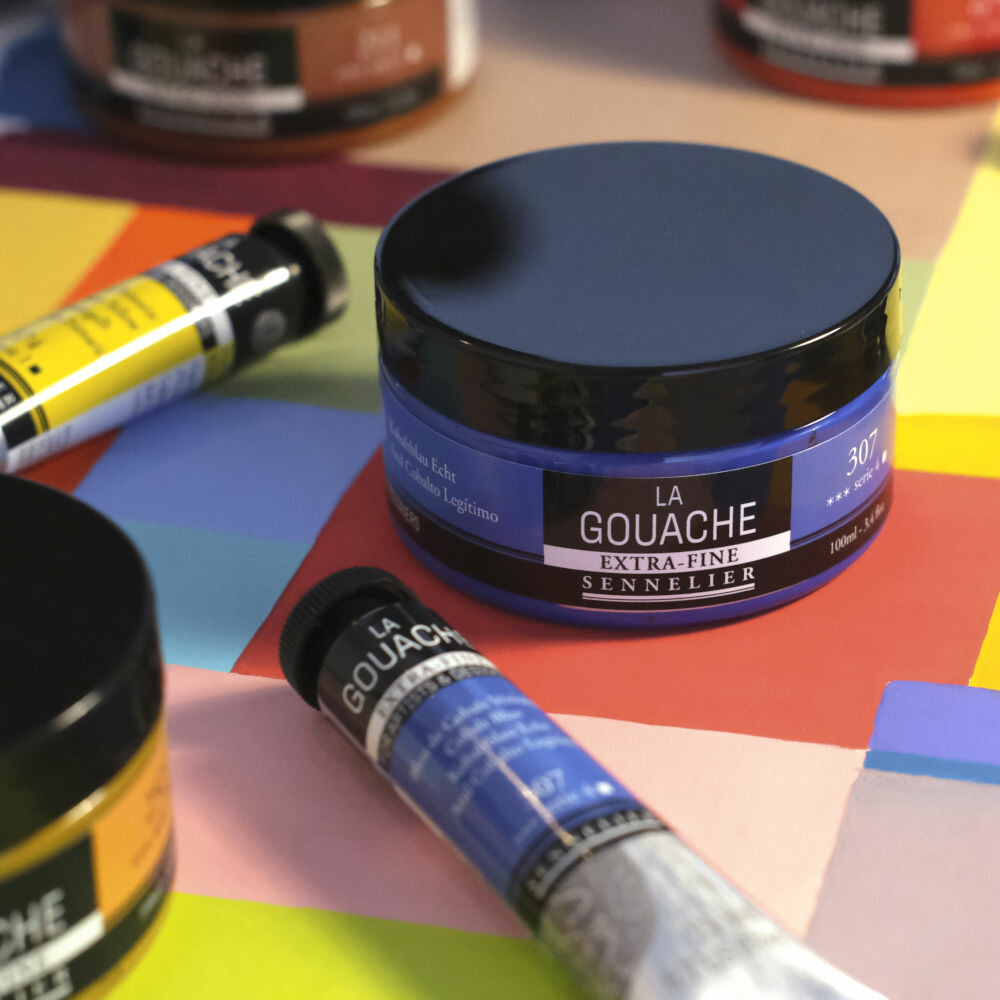
Let's take Cobalt Blue as an example. The ‘true’ tube is made with a single cobalt pigment, which is rare and expensive. The imitation, or ‘tone’, has the same shade but is made from a mixture of several less expensive synthetic pigments. In appearance, the colours are similar, but their DNA is completely different, which becomes apparent when they are mixed.
Looking at the labels, the trap is revealed:
The Series: Genuine Cobalt Blue will be in a high series, while its imitation will be in Series 1.
The Colour Index: The genuine colour will be single-pigment. The imitation will list three different pigments.
Opacity: Genuine cobalt pigment is semi-transparent. The imitation, in order to achieve the same covering shade, will often contain a white pigment, making it opaque.
This comparison is the ultimate proof: knowing how to read a tube allows you to understand why a colour is expensive, how it will behave in your mixtures and whether it really suits your technique.
7. The Batch Number
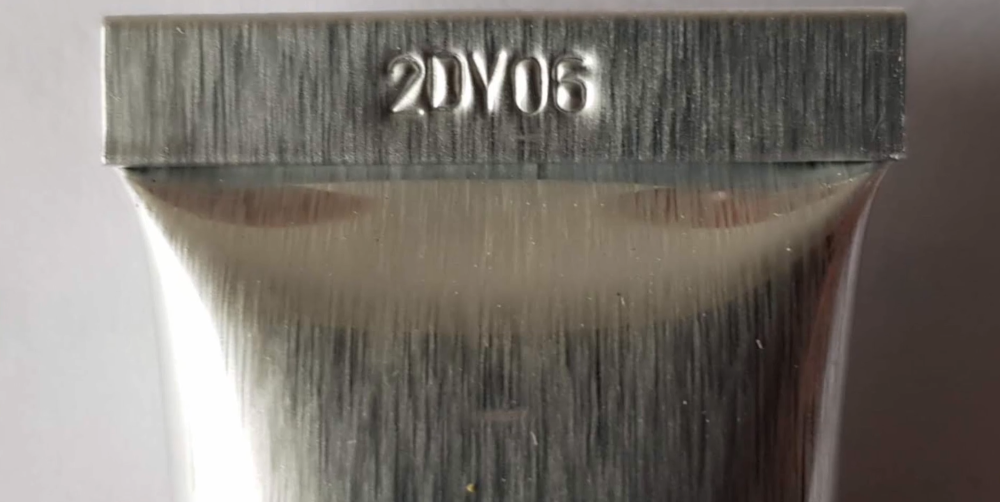
If you look closely at the fold at the top of the tube, you will see a small engraved code. This is the batch number.
Its function is purely technical. If you ever encounter a quality defect with your paint, this is the number you will need to provide to the manufacturer. It will help them identify the date of manufacture of your colour and locate the batch in question. A discreet detail, often reserved for insiders, but one that ensures perfect traceability.
Key takeaway:
Knowing how to read and interpret these codes, from pigment concentration to lightfastness, gives you the power to make smarter, more economical and, above all, more creative choices. You'll never look at a paint shelf the same way again.